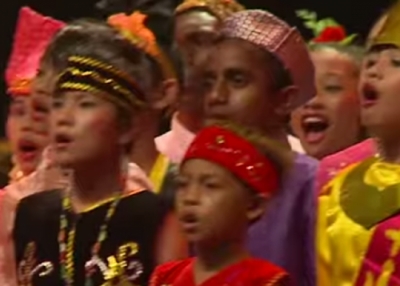
To the glory of God, this is a report about some of the marvelous things He has done during the last several years through our humble efforts in the International Prayer Connect. It is also a request for your help if you feel a resonance in your heart about partnering with us for the World Youth Prayer Assembly, a magnificent initiative that is being planned by youth and children leaders for next year. It cannot happen without the generous support of many brothers and sisters in the Lord.
History
History is shaped by the united prayers of God's people in accordance with His many promises to that effect in Scripture. Therefore, since our inception, we in the IPC have sought to connect and unite Christ's people around the world in an increasingly global prayer movement. Here are thumbnail mentions of some of the initiatives the Lord has enabled us to accomplish:
December 2001, international and U.S. prayer leaders gathered in New York City near Ground Zero committing to the Lord and one another to pool our efforts in order to birth a global prayer network that would focus on international issues of concern to the Body of Christ such as terrorism, the HIV pandemic, wars and humanitarian crises as well as the fulfillment of the Great Commandment and Great Commission in the nations.
November 2002, in South Africa, almost 300 prayer network leaders and mobilizers from every region of the world gathered for the launch of the IPC. A number of regional prayer summits were then held and networks formed that have continue to unite the prayer networks and ministries in those regions till this day.
Three initiatives inside the United Nations (2007, 2009, 2013) with ambassadors and hundreds of prayer leaders from across the world participating
Three Children in Prayer global consultations (2006, 2008, 2013) bringing together those working with children to nurture them in intimacy with God and to empower them as young men and women of God with His unique calling for their lives
Numerous national prayer initiatives in difficult areas of the world with our international facilitation teams, often in the midst of war and human suffering. As a result, God's often sudden and startling breakthroughs bringing unforeseen peace agreements and governments of national unity as Christian leaders of all denominations have gathered to seek His face in accordance with 2 Chronicles 7:14: "If My people who are called by My name will humble themselves, pray, seek My face and turn from their wicked ways, I will hear from heaven, forgive their sin and heal their land."
Joined with the Global Day of Prayer to make it go global from 2004 after its leaders asked for our help. Hundreds of millions of believers in 200 nations have so far taken part during the years of the GDOP.
Actively bridging and embracing not only our own efforts but also many other prayer and mission networks as a "network of networks". This interdenominational, transcendent stance has enabled us to broker many different cooperative efforts that are the picture of "unity in diversity" in fulfillment of Jesus' prayer that we may be "one as He and the Father are one so the world may believe" (John 17).
In 2012, the IPC, in close cooperation with the Indonesian and Korean prayer movements as partners, brought together all known prayer networks and major ministries willing to participate for the World Prayer Assembly in Jakarta. Within Indonesia, up to 4 million people in almost 400 cities participated simultaneously in stadiums, churches and other public venues and by satellite TV. It was video-streamed through the Internet, God TV and Global Day of Prayer to many millions more, literally reaching the ends of the earth as possibly the largest prayer meeting in history.
Leadership
A leadership team of 24 men and women from every region of the world who lead various regional and international initiatives help direct the IPC. All of us volunteer our services without any remuneration. We also have a Board of Reference attached below. Through our database and the IPC Connections, a monthly prayer journal, we are in touch with about 5000 networks, ministries, prayer leaders and intercessors throughout the world.
World Youth Prayer Assembly
Both in Scripture and the history of the Church, the Lord has always used a vital prayer relationship with Himself to call and empower men and women of God for the unique missions He has for their lives. The IPC is now working on the World Youth Prayer Assembly with an international team of 40+ youth ministry leaders. We believe the Lord will use this WYPA called "UPrising (United Prayer rising) 2016-2017" to raise up a whole new generation of leadership for Christ's global Body and mission from the younger generation. Our Children in Prayer team is in touch with and helping to coordinate a movement of hundreds of thousands of praying children in various countries that will be included. We anticipate that a movement of many millions of the younger generation will be ignited as this prayer/mission movement rolls out around the world in successive waves. God will use the WYPA to call and empower the next generation, and through them generations to come. I am utterly convinced that supporting this focus on the youth and children is the most strategic thing we, as the older generation, can do for Christ's work on earth.
Request for your help
Hopefully, this letter has given you a clear idea of what the IPC is and what we are seeking to achieve. This initiative will be impossible without the support of many brothers and sisters in Christ through providing prayer and financial support. If you feel any resonance with this vision and would like more specific information about how you can partner with us to help make this initiative happen, we would like to share that with you. Just let me know through a quick email to This email address is being protected from spambots. You need JavaScript enabled to view it. or give me a call at 1 505 314-3331 FREE. If you would like to donate now, here is a link that will enable you to do so.
D o n a t i n g t o I P C a n d t h e W o r l d Y o u t h P r a y e r A s s e m b l y
PayPal is an online banking service that can receive donations from over 30 currencies worldwide through automatic draft and credit cards. It is safe and secure. International Prayer Connect is a non-profit ministry funded through the Transformation Prayer Foundation and relies on individual donations to keep the work going. If you are willing to provide support, please click below. Thank you for your sacrificial gift to IPC!
Click Here to Donate or visit http://www.ipcprayer.org/donate
IPC Leadership Team
Austen Ukachi, Coordinator, West Africa Prayer Network
Brian Mills, Interprayer and Senior Advisor to the IPC
Dr. Leslie Keegel, Co-chairman, Global Foursquare Movement
Steve Hawthorne, President, Waymakers
Gloria Au Yeung, China and Hong Kong United Prayer Altar
Refaat Gendy and Dr. Khaled Leon, Egypt United Prayer Movement
Yanira Gonzalez, Latin American Prayer Movement
Ian Cole, Director, World Prayer Centre, UK
Maria Harbajan, Coordinator, Caribbean Prayer Network
Ioan Peia, European Trumpet Call, Eastern Europe
Onassis Jeevaraj, Children in Prayer, India
Patrick Joshua, Coordinator, India National Prayer Network
Veronica Conteh, Youth Ambassadors, Sierra Leone, West Africa
Sarah Lee, President, All Nations Intercessors, South Korea
Tety Irwan and Irma Chon, Co-coordinators, Children in Prayer International
Grace Song, Lausanne and Call2All
Andy Page, International Prayer Alert and World Prayer Centre, UK
Jerome Ocampo, Coordinator, Jesus Revolution and World Youth Prayer Assembly
Hannah McVeigh, 24-7 Prayer Movement
Jason Mandryk, Former Coordinator of Operation World
Tom Victor, President, Great Commission Coalition and Transform World-4-14 Window Movements
Bishop Peter Sekhonyane, South African Prayer Watches and Royal Kids Children in Prayer movements.
Recently, a friend gave me the biography of one of the great intercessors of history, Daniel Nash. It is only 25 pages long but packs a big wallop. It mowed me down! I was "blown away" as we say here in the States by the way the Lord transformed a rejected, broken-hearted small church pastor into one of the mightiest prayer warriors in history, using his pain, brokenness and a physical affliction to do so. The booklet which you can read for yourself on the link below recounts this powerful story.
Father Nash, as he came to be called, would go into towns weeks or days before the much more famous preacher, Charles Finney, would arrive as part of a deliberate strategy to prepare the ground for revival. Nash would gather with one or two other intercessors, and they would give themselves to prayer, sometimes for days, laying on their faces in the spirit of travail until the assurance came that God would pour out His Spirit upon those communities. Finney relied on these selfless prayer warriors for the convicting outpouring of the Spirit that brought thousands upon thousands to Christ (over 100,000 in Rochester, New York alone), including blasphemous haters of the Gospel. Massive transformations of individual lives and families along with major social reforms that brought about the abolition of slavery and other marvelous results were the direct result of this revival now called the Second Great Awakening.
Nash only spent the last seven years of his life as Finney's partner in revival, but his quiet, behind the scenes, persistent heart-cries to God for the lost changed American history in profound ways. I was also encouraged by his obvious implementation of Jesus' powerful promise that even two or three can agree with prayers of unity and authority that will move both heaven and earth (Matthew 18:18-20). Of special relevance to those of us who work with children and youth, are these words concerning the Fulton Street Revival of the 1850's that arose in the generation after Nash and went around the world: "The youth of Nash's day were the leaders of perhaps the greatest revival of prayer in history."
Please click on the link below and be stirred and challenged as I was.
John Robb
Click to Daniel Nash's biography
Etiam porta sem malesuada magna mollis euismod.
Maecenas sed diam eget risus varius blandit sit amet non magna. Maecenas faucibus mollis interdum topas. Morbi leo risus, porta ac consectetur ac, vestibulum at eros. Nulla vitae elit libero, a pharetra augue.
Cras mattis consectetur purus sit amet fermentum.
Nullam quis risus eget urna mollis ornare vel eu leo. Nullam quis risus eget urna mollis ornare vel eu leo. Donec ullamcorper nulla non metus auctor fringilla. Donec ullamcorper nulla non metus auctor fringilla. Cras mattis consectetur purus sit amet fermentum. Aenean eu leo quam. Pellentesque ornare sem lacinia quam venenatis vestibulum
Cras mattis consectetur purus sit amet fermentum.
Nullam quis risus eget urna mollis ornare vel eu leo. Nullam quis risus eget urna mollis ornare vel eu leo. Donec ullamcorper nulla non metus auctor fringilla. Cras mattis consectetur purus sit amet fermentum. Etiam porta sem malesuada magna mollis euismod. Aenean eu leo quam. Pellentesque ornare sem lacinia quam venenatis vestibulum.
Sed posuere consectetur est at lobortis.
Donec ullamcorper nulla non metus auctor fringilla. Cras mattis consectetur purus sit amet fermentum. Nullam quis risus eget urna mollis ornare vel eu leo. Nullam quis risus eget urna mollis ornare vel eu leo. Donec ullamcorper nulla non metus auctor fringilla. Cras mattis consectetur purus sit amet fermentum.
Etiam porta sem malesuada magna mollis euismod. Aenean eu leo quam. Pellentesque ornare sem lacinia quam venenatis vestibulum. Sed posuere consectetur est at lobortis. Donec ullamcorper nulla non metus auctor fringilla.
Sed posuere consectetur est at lobortis. Donec ullamcorper nulla non metus auctor fringilla. Cras mattis consectetur purus sit amet fermentum. Nullam quis risus eget urna mollis ornare vel eu leo. Nullam quis risus eget urna mollis ornare vel eu leo. Donec ullamcorper nulla non metus auctor fringilla. Cras mattis consectetur purus sit amet fermentum. Etiam porta sem malesuada magna mollis euismod. Aenean eu leo quam.
Pellentesque ornare sem lacinia quam venenatis vestibulum. Sed posuere consectetur est at lobortis. Donec ullamcorper nulla non metus auctor fringilla.
Donec ullamcorper nulla non metus auctor fringilla. Cras mattis consectetur purus sit amet fermentum. Nullam quis risus eget urna mollis ornare vel eu leo. Nullam quis risus eget urna mollis ornare vel eu leo. Donec ullamcorper nulla non metus auctor fringilla. Cras mattis consectetur purus sit amet fermentum. Etiam porta sem malesuada magna mollis euismod. Aenean eu leo quam. Pellentesque ornare sem lacinia quam venenatis vestibulum. Sed posuere consectetur est at lobortis. Donec ullamcorper nulla non metus auctor fringilla.
Etiam porta sem malesuada magna mollis euismod. Maecenas sed diam eget risus varius blandit sit amet non magna. Maecenas faucibus mollis interdum. Morbi leo risus, porta ac consectetur ac, vestibulum at eros. Nulla vitae elit libero, a pharetra augue.
Cras mattis consectetur purus sit amet fermentum. Nullam quis risus eget urna mollis ornare vel eu leo. Nullam quis risus eget urna mollis ornare vel eu leo. Donec ullamcorper nulla non metus auctor fringilla. Donec ullamcorper nulla non metus auctor fringilla. Cras mattis consectetur purus sit amet fermentum. Aenean eu leo quam. Pellentesque ornare sem lacinia quam venenatis vestibulum
Sed posuere consectetur est at lobortis. Donec ullamcorper nulla non metus auctor fringilla. Cras mattis consectetur purus sit amet fermentum. Nullam quis risus eget urna mollis ornare vel eu leo. Nullam quis risus eget urna mollis ornare vel eu leo. Donec ullamcorper nulla non metus auctor fringilla. Cras mattis consectetur purus sit amet fermentum.
Etiam porta sem malesuada magna mollis euismod. Aenean eu leo quam. Pellentesque ornare sem lacinia quam venenatis vestibulum. Sed posuere consectetur est at lobortis. Donec ullamcorper nulla non metus auctor fringilla.
Pellentesque ornare sem lacinia quam venenatis vestibulum. Sed posuere consectetur est at lobortis. Donec ullamcorper nulla non metus auctor fringilla.
Donec ullamcorper nulla non metus auctor fringilla. Cras mattis consectetur purus sit amet fermentum. Nullam quis risus eget urna mollis ornare vel eu leo. Nullam quis risus eget urna mollis ornare vel eu leo. Donec ullamcorper nulla non metus auctor fringilla. Cras mattis consectetur purus sit amet fermentum. Etiam porta sem malesuada magna mollis euismod. Aenean eu leo quam. Pellentesque ornare sem lacinia quam venenatis vestibulum. Sed posuere consectetur est at lobortis. Donec ullamcorper nulla non metus auctor fringilla.
Etiam porta sem malesuada magna mollis euismod. Maecenas sed diam eget risus varius blandit sit amet non magna. Maecenas faucibus mollis interdum. Morbi leo risus, porta ac consectetur ac, vestibulum at eros. Nulla vitae elit libero, a pharetra augue.
Cras mattis consectetur purus sit amet fermentum. Nullam quis risus eget urna mollis ornare vel eu leo. Nullam quis risus eget urna mollis ornare vel eu leo. Donec ullamcorper nulla non metus auctor fringilla. Donec ullamcorper nulla non metus auctor fringilla. Cras mattis consectetur purus sit amet fermentum. Aenean eu leo quam. Pellentesque ornare sem lacinia quam venenatis vestibulum
Cras mattis consectetur purus sit amet fermentum. Nullam quis risus eget urna mollis ornare vel eu leo. Nullam quis risus eget urna mollis ornare vel eu leo. Donec ullamcorper nulla non metus auctor fringilla. Cras mattis consectetur purus sit amet fermentum. Etiam porta sem malesuada magna mollis euismod. Aenean eu leo quam. Pellentesque ornare sem lacinia quam venenatis vestibulum.
Sed posuere consectetur est at lobortis. Donec ullamcorper nulla non metus auctor fringilla. Cras mattis consectetur purus sit amet fermentum. Nullam quis risus eget urna mollis ornare vel eu leo. Nullam quis risus eget urna mollis ornare vel eu leo. Donec ullamcorper nulla non metus auctor fringilla. Cras mattis consectetur purus sit amet fermentum.
Etiam porta sem malesuada magna mollis euismod. Aenean eu leo quam. Pellentesque ornare sem lacinia quam venenatis vestibulum. Sed posuere consectetur est at lobortis. Donec ullamcorper nulla non metus auctor fringilla.
Sed posuere consectetur est at lobortis. Donec ullamcorper nulla non metus auctor fringilla. Cras mattis consectetur purus sit amet fermentum. Nullam quis risus eget urna mollis ornare vel eu leo. Nullam quis risus eget urna mollis ornare vel eu leo. Donec ullamcorper nulla non metus auctor fringilla. Cras mattis consectetur purus sit amet fermentum. Etiam porta sem malesuada magna mollis euismod. Aenean eu leo quam.
Pellentesque ornare sem lacinia quam venenatis vestibulum. Sed posuere consectetur est at lobortis. Donec ullamcorper nulla non metus auctor fringilla.
Donec ullamcorper nulla non metus auctor fringilla. Cras mattis consectetur purus sit amet fermentum. Nullam quis risus eget urna mollis ornare vel eu leo. Nullam quis risus eget urna mollis ornare vel eu leo. Donec ullamcorper nulla non metus auctor fringilla. Cras mattis consectetur purus sit amet fermentum. Etiam porta sem malesuada magna mollis euismod. Aenean eu leo quam. Pellentesque ornare sem lacinia quam venenatis vestibulum. Sed posuere consectetur est at lobortis. Donec ullamcorper nulla non metus auctor fringilla.
Etiam porta sem malesuada magna mollis euismod. Maecenas sed diam eget risus varius blandit sit amet non magna. Maecenas faucibus mollis interdum. Morbi leo risus, porta ac consectetur ac, vestibulum at eros. Nulla vitae elit libero, a pharetra augue.
Cras mattis consectetur purus sit amet fermentum. Nullam quis risus eget urna mollis ornare vel eu leo. Nullam quis risus eget urna mollis ornare vel eu leo. Donec ullamcorper nulla non metus auctor fringilla. Donec ullamcorper nulla non metus auctor fringilla. Cras mattis consectetur purus sit amet fermentum. Aenean eu leo quam. Pellentesque ornare sem lacinia quam venenatis vestibulum
Cras mattis consectetur purus sit amet fermentum. Nullam quis risus eget urna mollis ornare vel eu leo. Nullam quis risus eget urna mollis ornare vel eu leo. Donec ullamcorper nulla non metus auctor fringilla. Cras mattis consectetur purus sit amet fermentum. Etiam porta sem malesuada magna mollis euismod. Aenean eu leo quam. Pellentesque ornare sem lacinia quam venenatis vestibulum.
Sed posuere consectetur est at lobortis. Donec ullamcorper nulla non metus auctor fringilla. Cras mattis consectetur purus sit amet fermentum. Nullam quis risus eget urna mollis ornare vel eu leo. Nullam quis risus eget urna mollis ornare vel eu leo. Donec ullamcorper nulla non metus auctor fringilla. Cras mattis consectetur purus sit amet fermentum.
Etiam porta sem malesuada magna mollis euismod. Aenean eu leo quam. Pellentesque ornare sem lacinia quam venenatis vestibulum. Sed posuere consectetur est at lobortis. Donec ullamcorper nulla non metus auctor fringilla.
Sed posuere consectetur est at lobortis. Donec ullamcorper nulla non metus auctor fringilla. Cras mattis consectetur purus sit amet fermentum. Nullam quis risus eget urna mollis ornare vel eu leo. Nullam quis risus eget urna mollis ornare vel eu leo. Donec ullamcorper nulla non metus auctor fringilla. Cras mattis consectetur purus sit amet fermentum. Etiam porta sem malesuada magna mollis euismod. Aenean eu leo quam.
Pellentesque ornare sem lacinia quam venenatis vestibulum. Sed posuere consectetur est at lobortis. Donec ullamcorper nulla non metus auctor fringilla.
Donec ullamcorper nulla non metus auctor fringilla. Cras mattis consectetur purus sit amet fermentum. Nullam quis risus eget urna mollis ornare vel eu leo. Nullam quis risus eget urna mollis ornare vel eu leo. Donec ullamcorper nulla non metus auctor fringilla. Cras mattis consectetur purus sit amet fermentum. Etiam porta sem malesuada magna mollis euismod. Aenean eu leo quam. Pellentesque ornare sem lacinia quam venenatis vestibulum. Sed posuere consectetur est at lobortis. Donec ullamcorper nulla non metus auctor fringilla.
Below are different typography which can be use..
WPC Heading 1 Purple
Etiam porta sem malesuada magna mollis euismod. Maecenas sed diam eget risus varius blandit sit amet non magna. Maecenas faucibus mollis interdum. Morbi leo risus, porta ac consectetur ac, vestibulum at eros. Nulla vitae elit libero, a pharetra augue.
WPC Heading 2 Purple
Cras mattis consectetur purus sit amet fermentum. Nullam quis risus eget urna mollis ornare vel eu leo. Nullam quis risus eget urna mollis ornare vel eu leo. Donec ullamcorper nulla non metus auctor fringilla.
WPC Heading 3 Purple
Etiam porta sem malesuada magna mollis euismod. Aenean eu leo quam. Pellentesque ornare sem lacinia quam venenatis vestibulum. Sed posuere consectetur est at lobortis. Donec ullamcorper nulla non metus auctor fringilla.
WPC Heading 4 Purple
Etiam porta sem malesuada magna mollis euismod. Aenean eu leo quam. Pellentesque ornare sem lacinia quam venenatis vestibulum. Sed posuere consectetur est at lobortis. Donec ullamcorper nulla non metus auctor fringilla.
WPC Heading 1 Green
Etiam porta sem malesuada magna mollis euismod. Maecenas sed diam eget risus varius blandit sit amet non magna. Maecenas faucibus mollis interdum. Morbi leo risus, porta ac consectetur ac, vestibulum at eros. Nulla vitae elit libero, a pharetra augue.
WPC Heading 2 Green
Cras mattis consectetur purus sit amet fermentum. Nullam quis risus eget urna mollis ornare vel eu leo. Nullam quis risus eget urna mollis ornare vel eu leo. Donec ullamcorper nulla non metus auctor fringilla.
WPC Heading 3 Green
Etiam porta sem malesuada magna mollis euismod. Aenean eu leo quam. Pellentesque ornare sem lacinia quam venenatis vestibulum. Sed posuere consectetur est at lobortis. Donec ullamcorper nulla non metus auctor fringilla.
WPC Heading 4 Green
Etiam porta sem malesuada magna mollis euismod. Aenean eu leo quam. Pellentesque ornare sem lacinia quam venenatis vestibulum. Sed posuere consectetur est at lobortis. Donec ullamcorper nulla non metus auctor fringilla.
WPC Heading 1 Gray
Etiam porta sem malesuada magna mollis euismod. Maecenas sed diam eget risus varius blandit sit amet non magna. Maecenas faucibus mollis interdum. Morbi leo risus, porta ac consectetur ac, vestibulum at eros. Nulla vitae elit libero, a pharetra augue.
WPC Heading 2 Gray
Cras mattis consectetur purus sit amet fermentum. Nullam quis risus eget urna mollis ornare vel eu leo. Nullam quis risus eget urna mollis ornare vel eu leo. Donec ullamcorper nulla non metus auctor fringilla.
WPC Heading 3 Gray
Etiam porta sem malesuada magna mollis euismod. Aenean eu leo quam. Pellentesque ornare sem lacinia quam venenatis vestibulum. Sed posuere consectetur est at lobortis. Donec ullamcorper nulla non metus auctor fringilla.
WPC Heading 4 Gray
Etiam porta sem malesuada magna mollis euismod. Aenean eu leo quam. Pellentesque ornare sem lacinia quam venenatis vestibulum. Sed posuere consectetur est at lobortis. Donec ullamcorper nulla non metus auctor fringilla.
Purple Background 01
Cras mattis consectetur purus sit amet fermentum. Nullam quis risus eget urna mollis ornare vel eu leo. Nullam quis risus eget urna mollis ornare vel eu leo. Donec ullamcorper nulla non metus auctor fringilla. Cras mattis consectetur purus sit amet fermentum. Etiam porta sem malesuada magna mollis euismod. Aenean eu leo quam. Pellentesque ornare sem lacinia quam venenatis vestibulum
Purple Background 02
Cras mattis consectetur purus sit amet fermentum. Nullam quis risus eget urna mollis ornare vel eu leo. Nullam quis risus eget urna mollis ornare vel eu leo. Donec ullamcorper nulla non metus auctor fringilla. Cras mattis consectetur purus sit amet fermentum. Etiam porta sem malesuada magna mollis euismod. Aenean eu leo quam. Pellentesque ornare sem lacinia quam venenatis vestibulum
Purple Background 03
Cras mattis consectetur purus sit amet fermentum. Nullam quis risus eget urna mollis ornare vel eu leo. Nullam quis risus eget urna mollis ornare vel eu leo. Donec ullamcorper nulla non metus auctor fringilla. Cras mattis consectetur purus sit amet fermentum. Etiam porta sem malesuada magna mollis euismod. Aenean eu leo quam. Pellentesque ornare sem lacinia quam venenatis vestibulum
Green Background 01
Cras mattis consectetur purus sit amet fermentum. Nullam quis risus eget urna mollis ornare vel eu leo. Nullam quis risus eget urna mollis ornare vel eu leo. Donec ullamcorper nulla non metus auctor fringilla. Cras mattis consectetur purus sit amet fermentum. Etiam porta sem malesuada magna mollis euismod. Aenean eu leo quam. Pellentesque ornare sem lacinia quam venenatis vestibulum
Green Background 02
Cras mattis consectetur purus sit amet fermentum. Nullam quis risus eget urna mollis ornare vel eu leo. Nullam quis risus eget urna mollis ornare vel eu leo. Donec ullamcorper nulla non metus auctor fringilla. Cras mattis consectetur purus sit amet fermentum. Etiam porta sem malesuada magna mollis euismod. Aenean eu leo quam. Pellentesque ornare sem lacinia quam venenatis vestibulum
Green Background 03
Cras mattis consectetur purus sit amet fermentum. Nullam quis risus eget urna mollis ornare vel eu leo. Nullam quis risus eget urna mollis ornare vel eu leo. Donec ullamcorper nulla non metus auctor fringilla. Cras mattis consectetur purus sit amet fermentum. Etiam porta sem malesuada magna mollis euismod. Aenean eu leo quam. Pellentesque ornare sem lacinia quam venenatis vestibulum
Gray Background 01
Cras mattis consectetur purus sit amet fermentum. Nullam quis risus eget urna mollis ornare vel eu leo. Nullam quis risus eget urna mollis ornare vel eu leo. Donec ullamcorper nulla non metus auctor fringilla. Cras mattis consectetur purus sit amet fermentum. Etiam porta sem malesuada magna mollis euismod. Aenean eu leo quam. Pellentesque ornare sem lacinia quam venenatis vestibulum
Gray Background 02
Cras mattis consectetur purus sit amet fermentum. Nullam quis risus eget urna mollis ornare vel eu leo. Nullam quis risus eget urna mollis ornare vel eu leo. Donec ullamcorper nulla non metus auctor fringilla. Cras mattis consectetur purus sit amet fermentum. Etiam porta sem malesuada magna mollis euismod. Aenean eu leo quam. Pellentesque ornare sem lacinia quam venenatis vestibulum
Gray Background 03
Cras mattis consectetur purus sit amet fermentum. Nullam quis risus eget urna mollis ornare vel eu leo. Nullam quis risus eget urna mollis ornare vel eu leo. Donec ullamcorper nulla non metus auctor fringilla. Cras mattis consectetur purus sit amet fermentum. Etiam porta sem malesuada magna mollis euismod. Aenean eu leo quam. Pellentesque ornare sem lacinia quam venenatis vestibulum
Purple Sidebar
Purple Sidebar Right
Green Sidebar
Green Sidebar Right
Gray Sidebar
Gray Sidebar Right
Cras mattis consectetur purus sit amet fermentum. Nullam quis risus eget urna mollis ornare vel eu leo. Nullam quis risus eget urna mollis ornare vel eu leo. Donec ullamcorper nulla non metus auctor fringilla. Cras mattis consectetur purus sit amet fermentum. Etiam porta sem malesuada magna mollis euismod. Aenean eu leo quam. Pellentesque ornare sem lacinia quam venenatis vestibulum. Sed posuere consectetur est at lobortis. Donec ullamcorper nulla non metus auctor fringilla. Cras mattis consectetur purus sit amet fermentum. Nullam quis risus eget urna mollis ornare vel eu leo. Nullam quis risus eget urna mollis ornare vel eu leo. Donec ullamcorper nulla non metus auctor fringilla. Cras mattis consectetur purus sit amet fermentum. Etiam porta sem malesuada magna mollis euismod. Aenean eu leo quam. Pellentesque ornare sem lacinia quam venenatis vestibulum. Sed posuere consectetur est at lobortis. Donec ullamcorper nulla non metus auctor fringilla.
Sed posuere consectetur est at lobortis. Donec ullamcorper
nulla non metus auctor fringilla. Cras mattis consectetur purus sit amet fermentum. Nullam quis risus eget urna mollis ornare vel eu leo. Nullam quis risus eget urna mollis ornare vel eu leo. Donec ullamcorper nulla non metus auctor fringilla. Cras mattis consectetur purus sit amet fermentum. Etiam porta sem malesuada magna mollis euismod. Aenean eu leo quam. Pellentesque ornare sem lacinia quam venenatis vestibulum. Sed posuere consectetur est at lobortis. Donec ullamcorper nulla non metus auctor fringilla.
A report has claimed that residents in Oregon are only now finding out that the state
allows teenagers as young as 15 to get state-subsidised sex-change operations without
parental notification. ‘It is trespassing on the hearts, the minds, the bodies of our
children,’ Lori Porter of Parents' Rights in Education told Fox News on Thursday.
‘They're our children. And for a decision, a life-altering decision like that to be done
without the knowledge of a parent or guardian, it's mind-boggling .’ The executive
director of the Trans-Active Gender Centre in Portland, said the Fox News report is
‘irrational’ and the policy does not mean that 15-year-olds can simply walk into a
doctor's office and get sex-change surgery. The facts are: The age of consent has been
15 since 1971. Youth in Oregon can access all healthcare at the age of 15. For sex-change
operations they do not have to be older than 15.
Between 21 June and 1 July, four Christians were abducted in Baghdad. One was released
following police intervention. Ransoms were paid for the others’ release. However, two
were murdered even though ransoms had been paid and one was released. Imad Youkhana, an
Iraqi Christian member of parliament, issued a statement decrying this violence and urged
Iraqi authorities to provide greater protection for Iraq's Christians. He said the
violence is part of an intimidation campaign to force Christians to emigrate and
undermines the unity of Iraqi society. An Iraqi NGO, the Hammurabi Human Rights
Organisation , today (13 July) issued a similar appeal for the protection of Christians
in Iraq.
China: Police, politics and human rights
15 Jul 2015
There was widespread detention of human rights lawyers last weekend after more than 100
lawyers across the mainland issued a joint statement protesting against the disappearance
of crusading lawyer Wang Yu. Mainland police detained lawyers and law firm staff and
searched some of their homes and offices. Three human rights groups say that other people
have disappeared. Across 15 cities 57 people were taken away, summoned or detained by
police. One of them, Guangzhou-based lawyer Sui Muqing, was placed under ‘residential
surveillance at a designated location’ - a form of detention - for alleged ‘incitement to
subvert state power’ according to a police document given to his family. Some have since
been released but were warned by police to refrain from publicly voicing their support
for Wang Yu. Since lawyers started openly identifying with human rights causes and
coordinating their advocacy campaigns, they have become the closest thing China has to a
political opposition.
Yemen: UN cease-fire fails to take hold
15 Jul 2015
A cease-fire brokered by the United Nations that was to allow the delivery of relief supplies failed to
materialise in Yemen on Saturday, as a Saudi-led military coalition carried out
airstrikes and fighting continued between the Houthi rebels and rival militias in several
cities. Many are saying the international community urgently needs to revisit its posture
on Yemen’s war and put pressure on all parties to end the conflict and address the
humanitarian catastrophe. The UN has designated Yemen a level-three humanitarian crisis,
the highest level in the UN's ranking system. 21 out of 25 million Yemenis are in urgent
need of humanitarian assistance, of which 20 million need immediate access to water and
hygiene and 13 million need food. Relief workers report the situation is deteriorating
rapidly. They cannot get sufficient aid into the country to stop the downward spiral.
Yemeni children are at particular risk. See also: http://www.al-
monitor.com/pulse/originals/2015/07/yemen-houthi-saleh-saudi-arabia-humanitarian-
relief.html